💻 🗺️ 📊 🌲
Brett / B.J. Marraccini
Bouncing between information systems, photography and outdoor adventures.
 Washington State
------------
Home
 Essays and Notes
 GitHub Profile
 Resume / CV
 Photography Portfolio
 My Ascent List
 bjmarra[at]outlook[.]com
Volcanic Apparition
by B.J. Marraccini
\
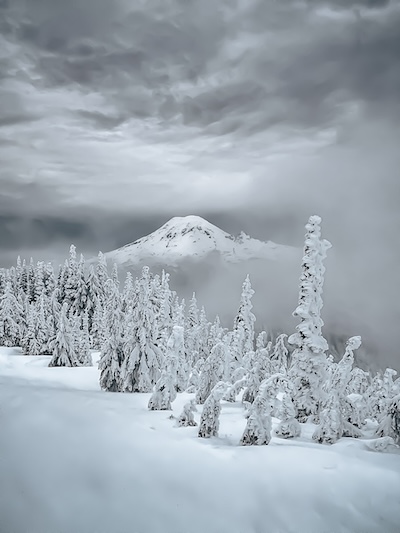
Cold winter mornings in the south Washington Cascades are sometimes bluebird, sometimes foggy, often times stormy and most of the time in transition between low pressure systems. This transition often affects one’s ability to see our volcanoes with clarity because the cloud decks are in a diurnal dance with the terrain, rising and falling and obscuring our views wholly based on your own elevation and aspect.
During a storm pattern, Mount Rainier / Tahoma is usually fully enshrouded as it takes the brunt of precipitation and winds due to its massive exposure. It could be snowing lightly at 6500’, hammering snow and ice with hurricane force winds at 10000’, and clear and sunny at 14000’. All of this to say that seeing our volcanoes isn’t a given up here in the Pacific Northwest, it’s a privilege.
So when the tail end of a storm is passing through, and the clouds are beginning to break up ever so slightly, Tahoma can appear like a ghost - sometimes for less than 30 seconds - and then disappear for days. When the stratovolcano does appear, everyone paying attention to it stops what they’re doing and just stares. Intently. it feels like a blessing to see this aloof and very alive mountain during the winter, and no doubt about it, we are lucky to experience its magnificence.
/
Back to Essays
tags: stories - photos